조선시대의 영화(榮華)는 지금과 다른 걸까. 켜켜이 펼쳐진 청보리밭을 넘어 흔적이 멈춘 한적한 산길에 들자, 숲은 나무의 가지를 길가로 뻗어 이방인의 차를 스치듯 만진다.
인기척이 그리워 내민 가지가 차창을 스치는 소리에 돌아본 창밖에 폐허가 된 집터를 지나고 있었다. 시선이 고정돼 뒤를 돌아보지만 숲의 작은 손과 뒤틀린 길의 향배는 뱃머리를 흔들 듯 넘실거리는 파도의 너울처럼 이방인의 눈을 한곳에 머물지 못하게 하고 있다. 못내 시선 밖으로 사라져 버린 민가의 흔적은 선생을 조우하려 나선 여정의 행로를 상상하게 한다.
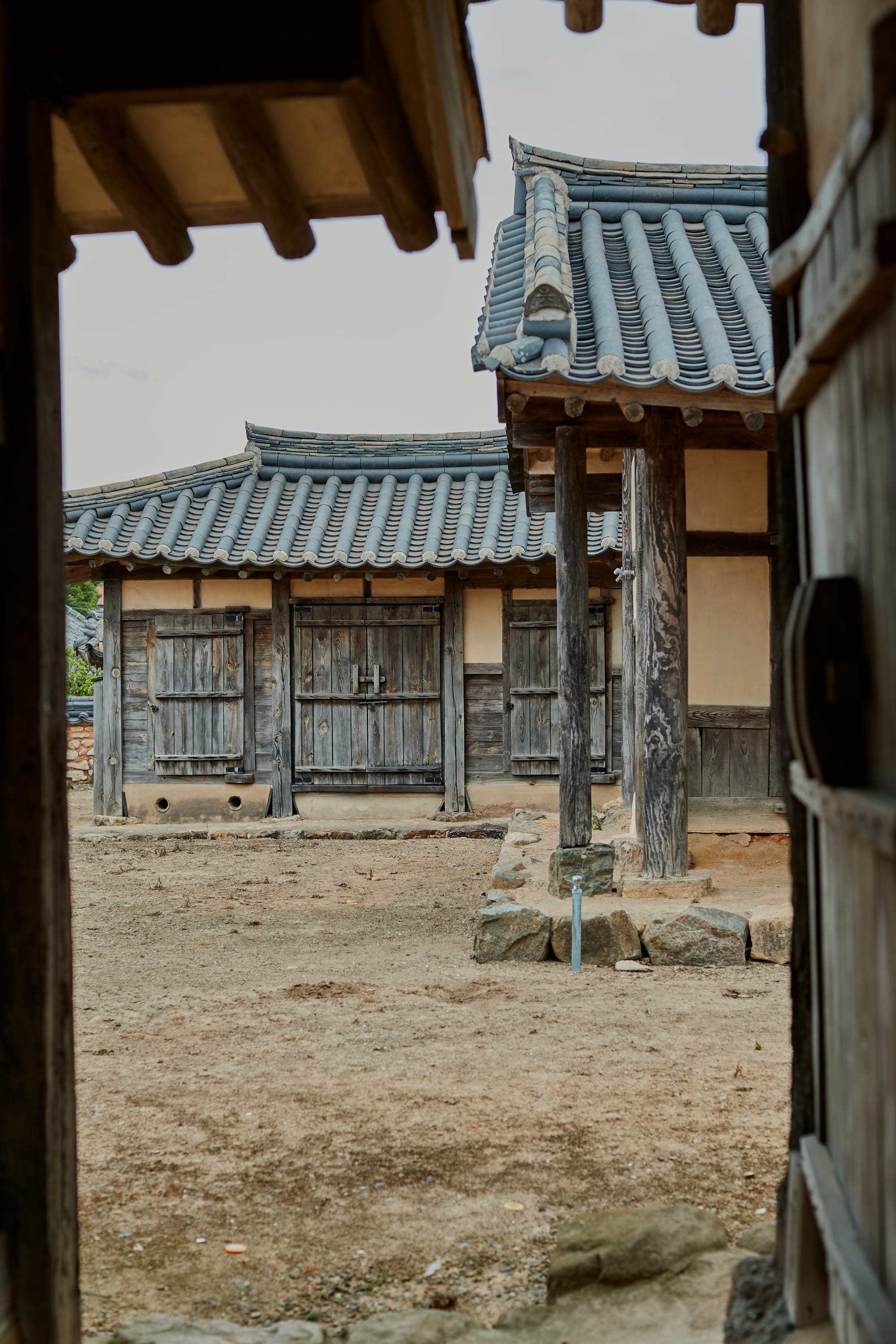
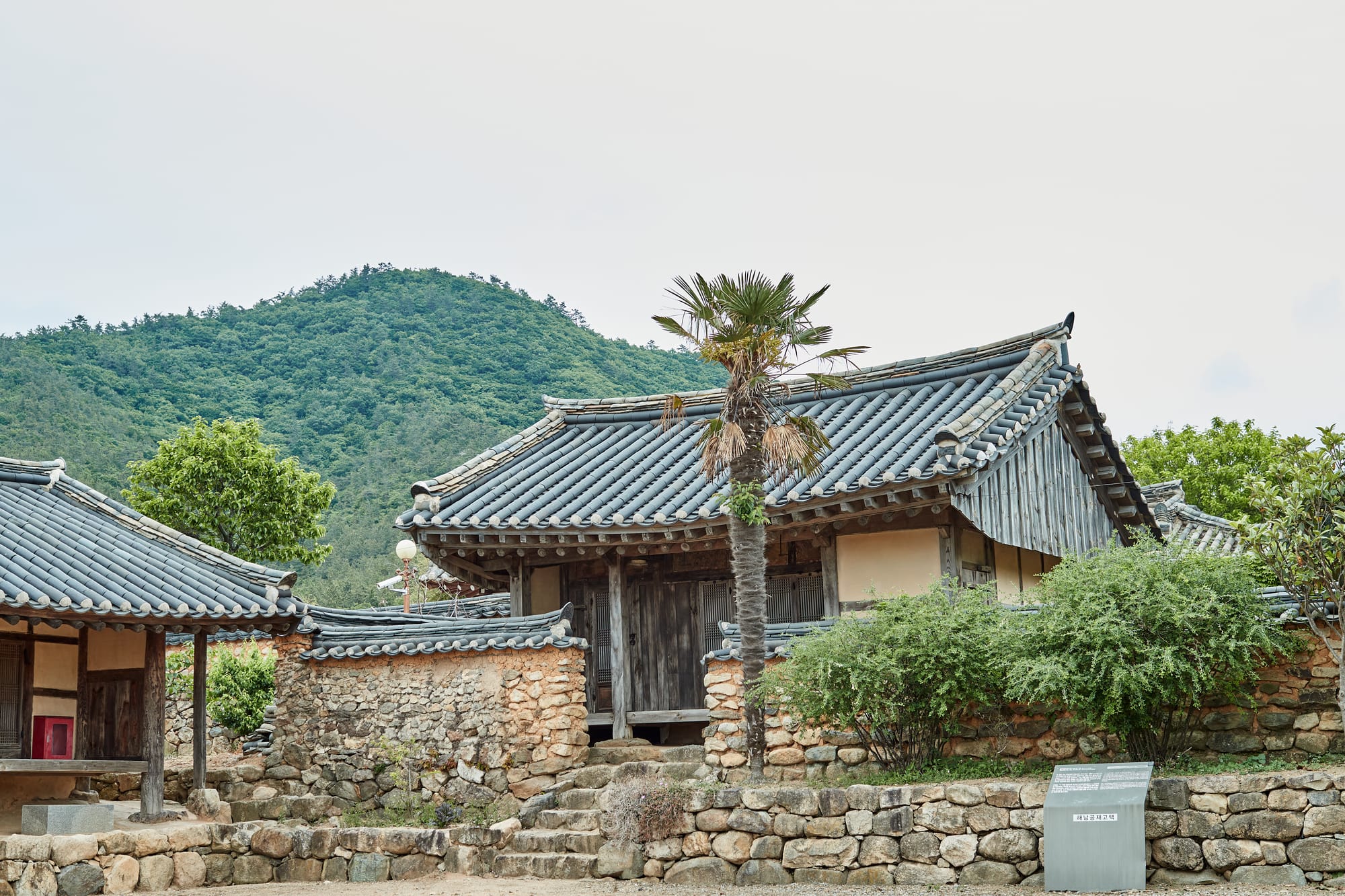
대문의 흔적 없이 마당이 트인 집 마루는 왼쪽 높은 지대의 사당 앞에 야자수를 심었다. 오른쪽 길게 배치된 사랑채 맞배지붕 끝자락을 경계 삼아 놓인 고목의 향나무를 거느리고 있으며 앞산을 비켜 트인 곳에는 바다가 보인다. 현산면 백포마을 공재의 고택은 마을 뒤쪽에 나지막이 솟은 망매산을 주봉으로 양쪽 산줄기를 안으며 바다를 향해 있다.
선생의 흔적은 멀리서 찾아온 이방인들을 스스럼없이 받아주었고 사당으로 발길을 향하게 했다. 누구랄 것도 없이 벽처럼 가로놓인 사랑채를 대면하며 오른쪽 사당으로 향하고 있었고 높게 자란 한옥 앞의 야자수는 흔적의 공간으로 도입하는 열차역의 깃발 같았다.
노랗게 빛바랜 벽화의 색감은 단색으로 표현할 수 없는 시간의 혼재함을 막연히 느낄 수 있으며 시선의 주변을 경건하게 만드는 주술 같은 눈가림 같다. 가문의 흔적만으로 남긴 공간을 수호하는 사당에서 인사를 건넨 후에야 펼친 벽화의 그림 속을 이야기 듣는 듯이 바라볼 수 있었다. 빛바랜 노란 배색 위에 나비와 연꽃, 곡식과 풍요를 느낄 수 있는 눈의 펼침은 조선의 남도에서 그 영화를 빛 발하던 고산 윤선도 가문의 시간을 거슬러 짐작할 수 있다. 조용히 속삭이듯 말하는 가문의 소리는 조용하게 남겨진 빈 공간의 외로움과 대비되는 서운함이 배어 나오는 듯하다.
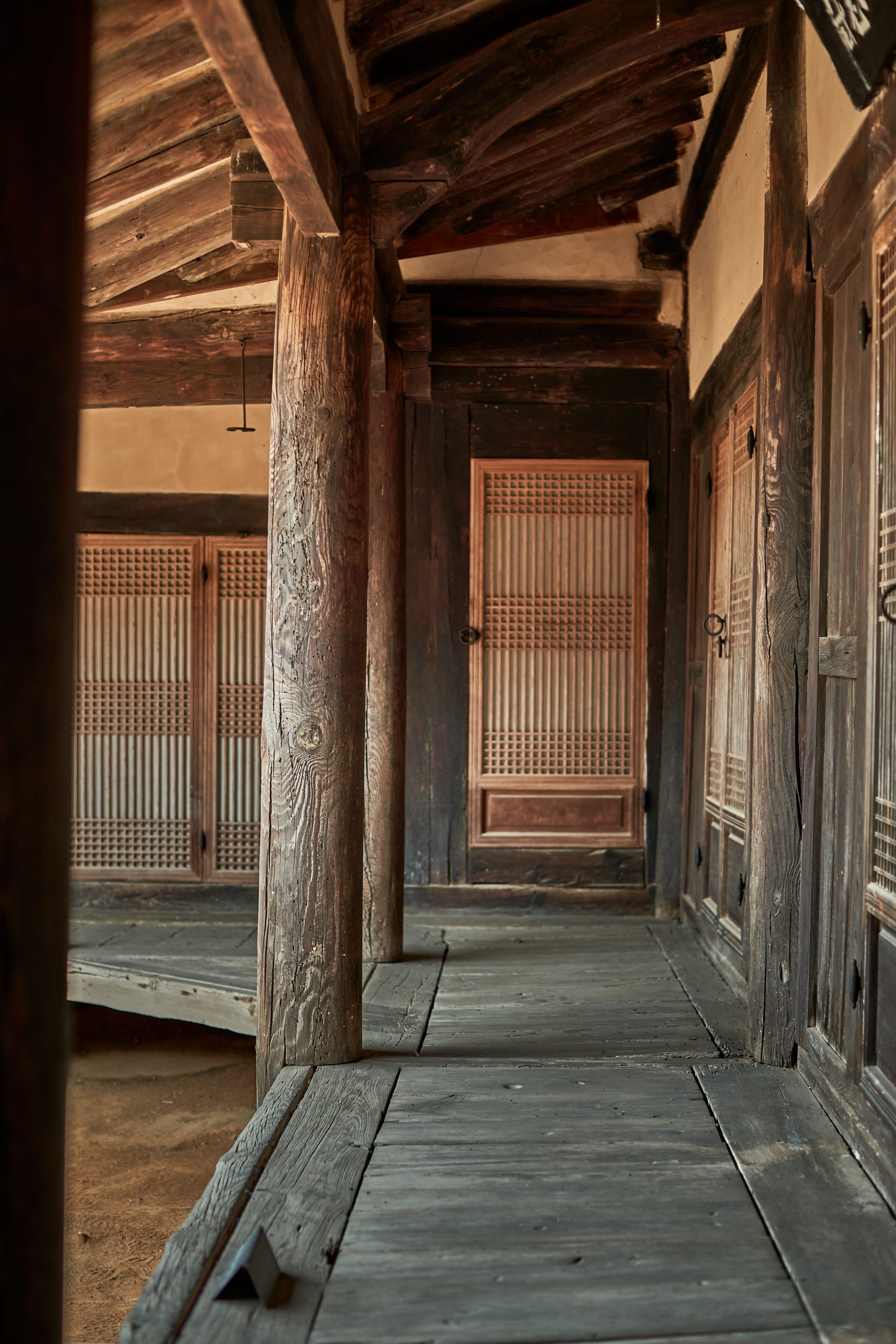
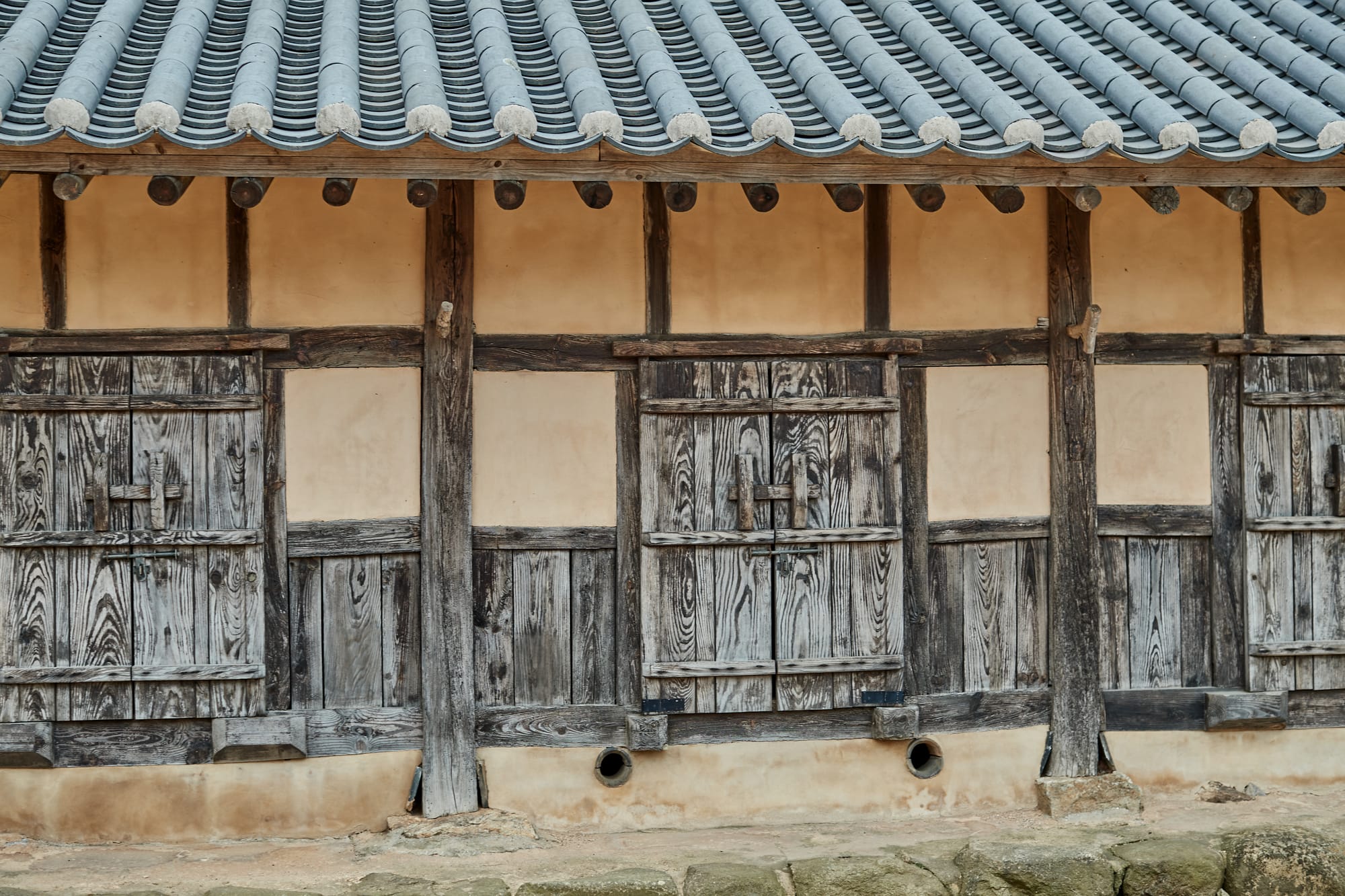
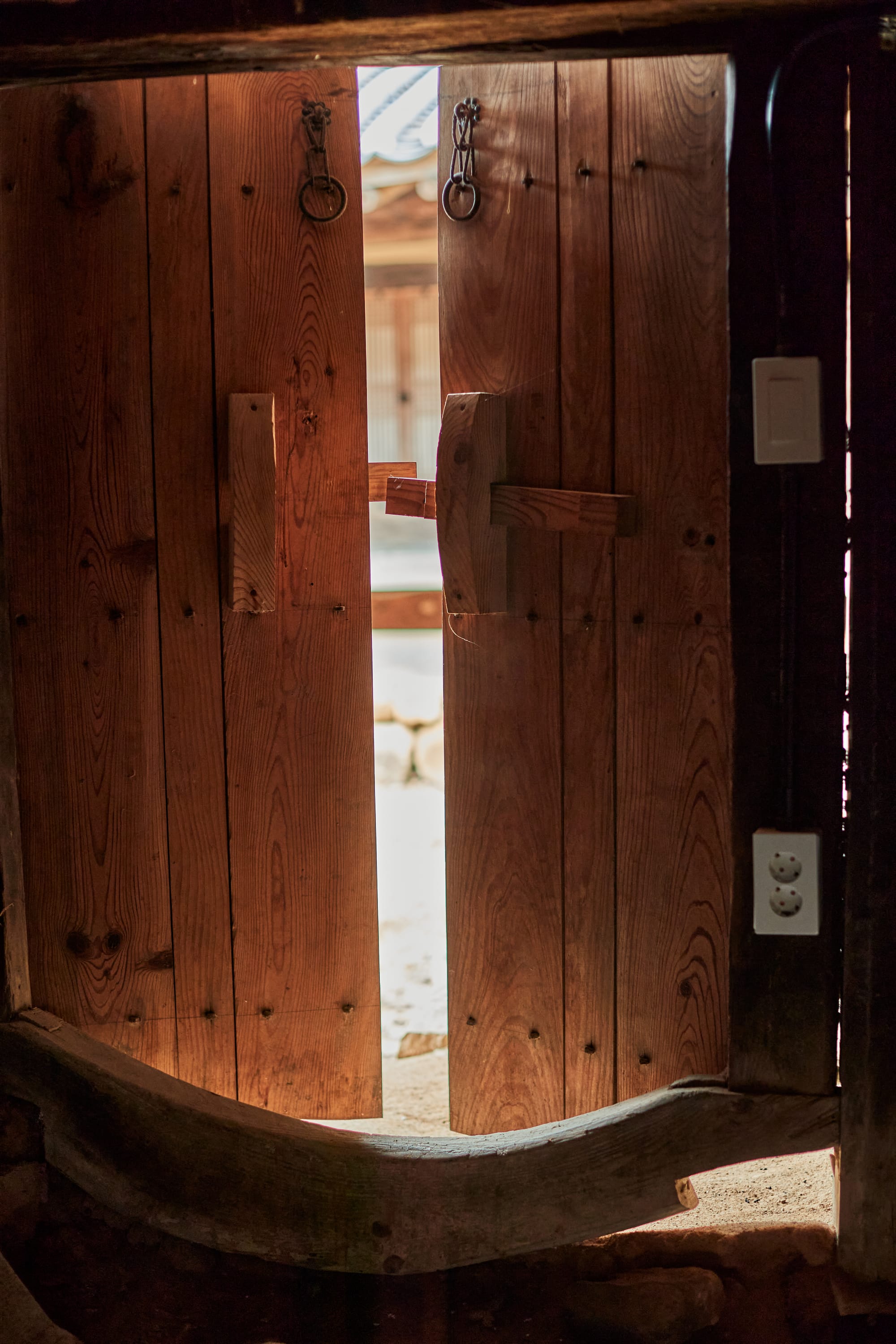
긴 맞배지붕 사랑채의 중간 작은 문으로 이어진 길에서 안채로 다다를 수 있으니 그 공간을 지나며 느낄 수 있는 시공감은 시간 여행의 비좁은 길목을 지나는 상상을 부른다. 안채의 마당에 들어서 집의 공간에 안기니 그 시절 위세와 화려함을 느껴볼 수 있고 사라져 버린 집채들을 그려보니 바다를 앞둔 해남 땅에 그 풍경이 웅장했을 듯하다.
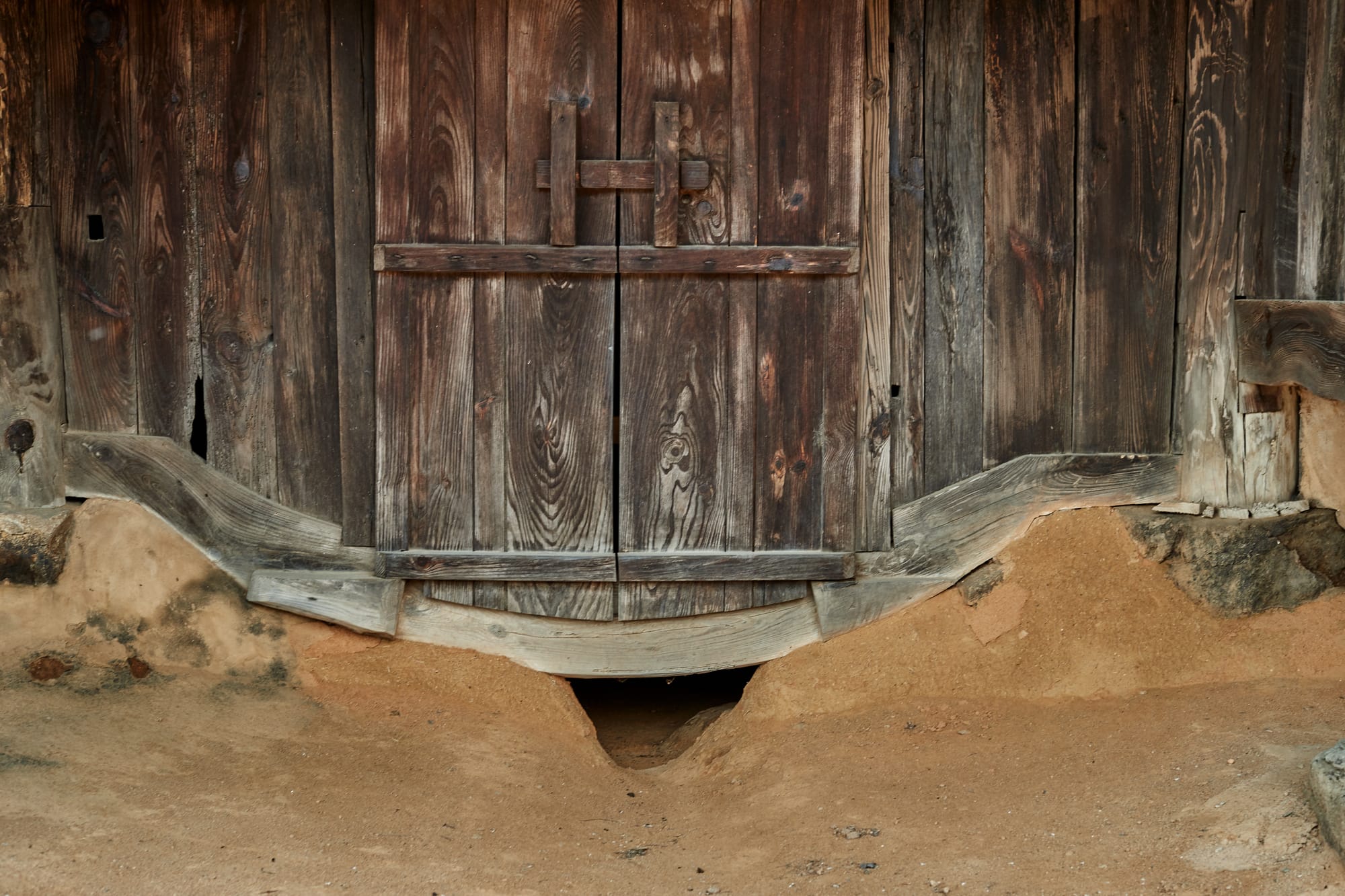
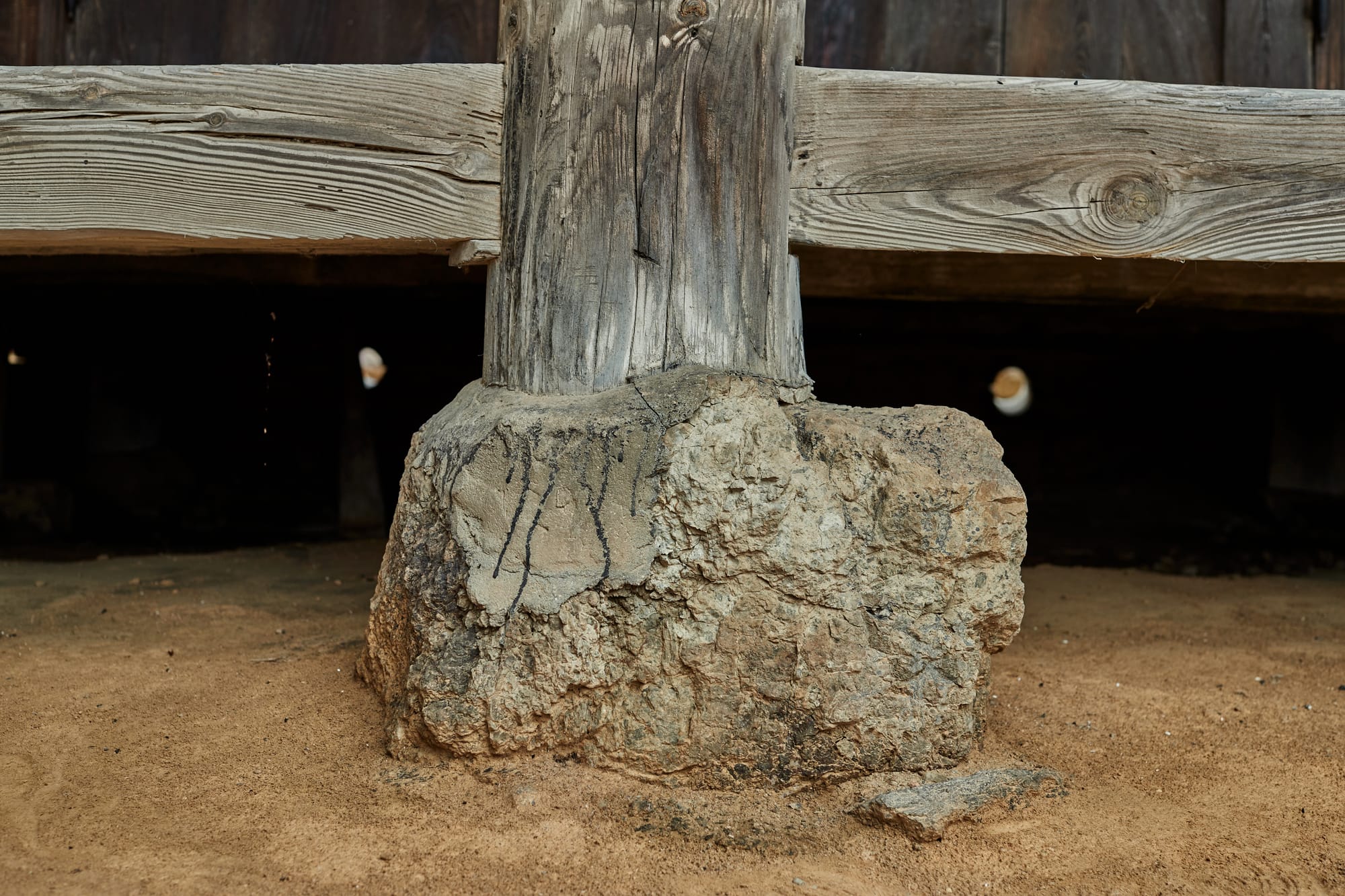
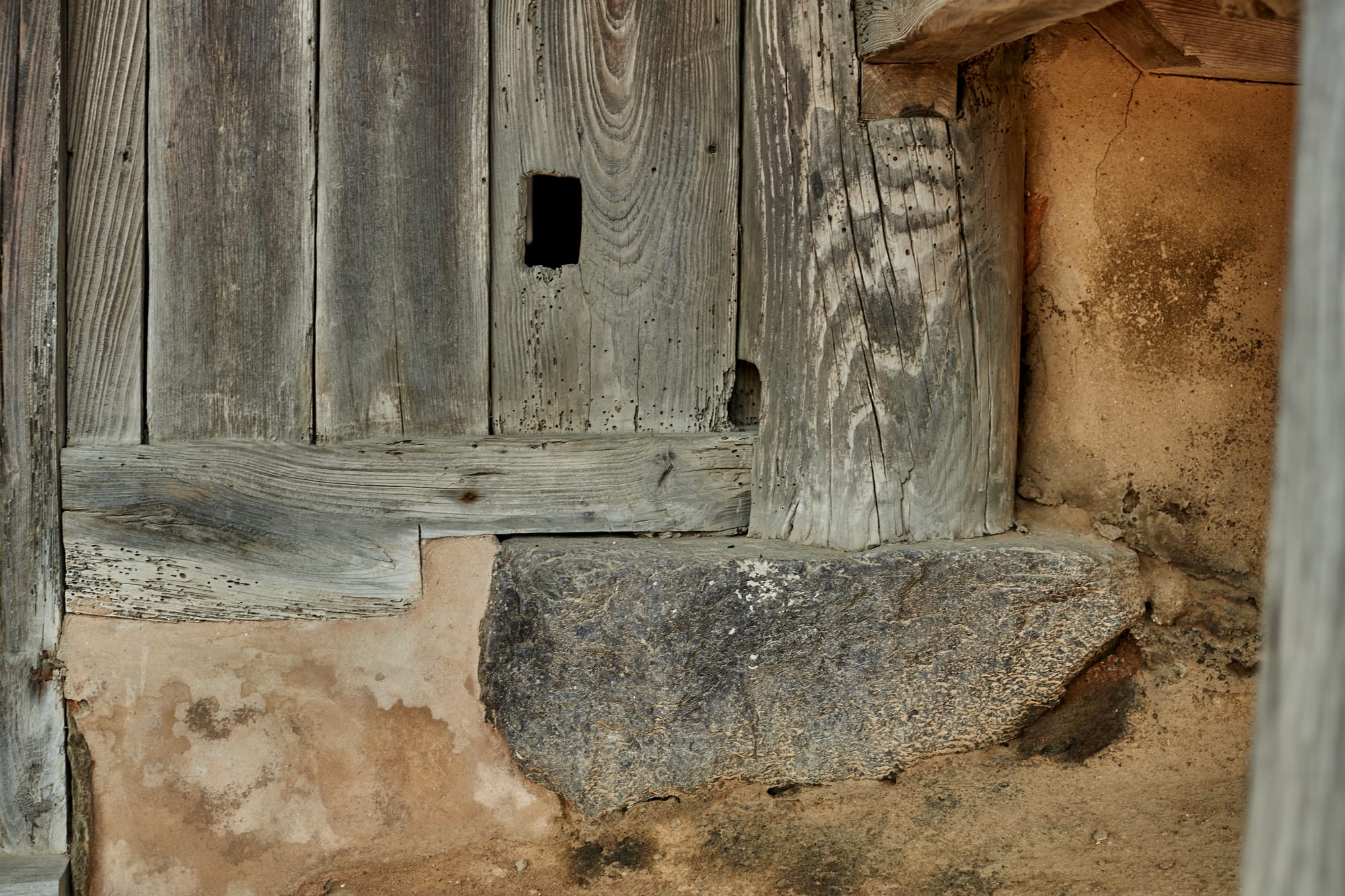
가늘게 뜬 눈으로 나무 표질을 세세히 보니 화려하고 웅장해 그 표면이 범의 무늬처럼 흔들리던 결은 아슬아슬하게 삭아버리는 나무의 현상이다. 외로움에 겹겹이 쌓여 그 말을 잃은 벙어리처럼 집은 가련하고 아프게 자리하고 있었다. 그 옛날 조선을 호령하던 위세와 화려함의 기억은 빈 공간으로 남아 흔적의 발길을 회상하는 이들의 위로에 버티고 있다.
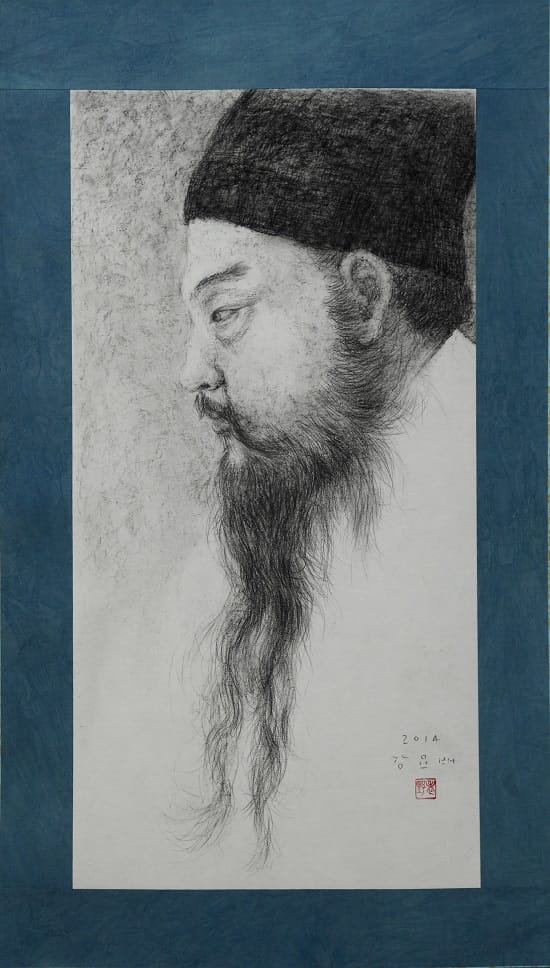
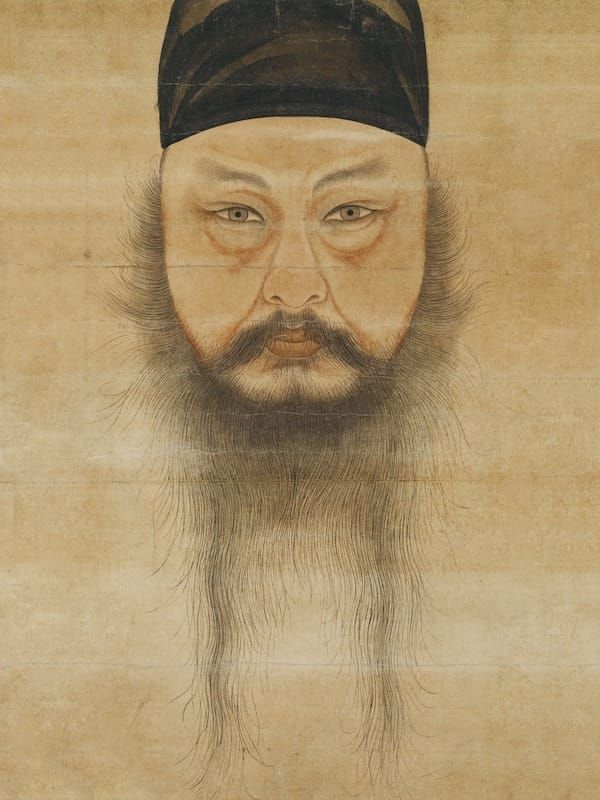
공재의 자화상을 상상하며 조우하려던 공간의 기대는 여지없는 외로움과 그에 대한 송구함으로 대신하고 있다. 차마 발길하여 뒷산 선생의 묘를 찾지 못하고 대문 없이 펼쳐진 사랑채 마당의 빈 땅에서 남해 보이는 바다만 멍하니 조우한다.
선생의 증조부인 고산 윤선도가 지은 공재 고택은 사료의 추정으로 인조 8년(1630년)에 건축된 것으로 예상하고, 안채의 종도리 장여 밑의 중수 상량문에 따르면 현종 11년(1670년)에 건립하고 순조 11년(1811년)에 중수한 것으로 나타난다. 아마도 인조 8년에 시작한 공사와 증축이 이어져 50여 채의 건물이 군락을 이룰 때 건립과 이후 중수된 시기를 기록한 것으로 추정한다.
To Haenam, in Search of Gongjae
Was the glory and splendor of the Joseon era so different from what we know today? Beyond the layered fields of green barley, we entered a quiet mountain road where all traces seemed to come to a halt. The forest stretched its branches toward the roadside, brushing the stranger’s car as if gently touching it.
At the sound of those branches, reaching out as though longing for human presence, grazing the car window, I turned to look outside and found we were passing the ruins of an abandoned homestead. My gaze fixed itself there, and I looked back, yet the small hands of the forest and the twisted course of the road, like the swell of waves rocking the bow of a boat, would not allow the stranger’s eyes to rest in one place. The traces of the vanished dwelling, disappearing at last beyond the edge of sight, led me to imagine the path of a journey undertaken to encounter the master.
With no trace of a front gate, the open courtyard of the house revealed a wooden floor, while on the higher ground to the left, a palm tree had been planted before the shrine. To the right, the long sarangchae, with its gabled roof, stood as a boundary, attended by an old juniper tree placed at the edge of its eaves. Beyond the front mountain, where the view opened slightly to one side, the sea could be seen. The old house of Gongjae in Baekpo Village, Hyeonsan-myeon, faces the sea, embracing the ridgelines on both sides with Mangmaesan, rising low behind the village, as its principal peak.
The traces of the master received the strangers who had come from afar without reserve and guided their steps toward the shrine. As if by unspoken agreement, we faced the sarangchae lying across the site like a wall and made our way toward the shrine on the right. The tall palm tree standing before the hanok seemed like a flag at a railway station, marking the entrance into a space of traces.
The yellowed tones of the faded mural gave an indistinct sense of time layered beyond what any single color could express. They seemed like a kind of shamanic veil, making the edges of one’s gaze solemn. Only after offering greetings at the shrine, which stood guard over a space left behind solely as a trace of the family, could I look into the mural as though listening to the stories contained within its painted scenes. Upon the faded yellow ground, the unfolding vision of butterflies, lotus flowers, grain, and abundance allowed one to imagine, across time, the days when the family of Gosan Yun Seondo shone with glory in the southern lands of Joseon. The quiet voice of the family, whispering softly, seemed to carry a lingering sadness that contrasted with the loneliness of the empty space left behind
From the narrow path leading through a small door in the middle of the long gabled sarangchae, one could reach the anchae. Passing through that space brought forth the sensation of moving through a narrow passage in time. Stepping into the courtyard of the anchae and being held within the space of the house, one could sense the authority and splendor of those days. Imagining the buildings that have since disappeared, the scene that once stood on this land of Haenam before the sea must have been magnificent.
Narrowing my eyes and looking closely at the surface of the wood, I saw that the grain, once splendid and grand, wavering like the markings of a tiger, was now the fragile condition of timber slowly decaying. Layered in loneliness, the house stood there pitifully and painfully, like a mute figure that had lost its words. The memory of the authority and splendor that once commanded Joseon remains only as empty space, sustained by the consolation of those who come to recall the footsteps of its traces.
The expectation of encountering the space where I had imagined Gongjae’s self-portrait was replaced instead by an unmistakable loneliness, and by a sense of apology toward it. Unable to bring myself to climb the hill behind the house to visit the master’s grave, I stood in the empty ground of the sarangchae courtyard, spread open without a gate, and gazed blankly at the sea visible toward the South Sea.
The old house of Gongjae, built by his great-grandfather Gosan Yun Seondo, is presumed from historical records to have first been constructed in the eighth year of King Injo’s reign, 1630. According to the reconstruction inscription beneath the jongdori jangyeo of the anchae, however, it was built in the eleventh year of King Hyeonjong’s reign, 1670, and repaired in the eleventh year of King Sunjo’s reign, 1811. It may be understood that the construction begun in 1630 continued through subsequent expansions, and that the dates recorded refer to the period when some fifty buildings came to form a clustered estate, as well as to later repairs.